TL;DR
Sessions store state server-side and are immediately revocable. JWTs are stateless tokens that can't be revoked until expiry without additional infrastructure. Sessions are more secure by default because compromised tokens can be invalidated instantly. Use JWTs for specific use cases like service-to-service auth, not as a default replacement for sessions.
The sessions vs JWT debate is one of the most misunderstood topics in web security. JWTs became popular for their stateless nature, but statelessness has security tradeoffs. Understanding these tradeoffs helps you choose the right approach for your vibe-coded applications.
Security Comparison
| Security Aspect | Sessions | JWTs |
|---|---|---|
| Revocation | Immediate | Not possible without blocklist |
| Token Theft Impact | Can invalidate | Valid until expiry |
| Token Size | Small (ID only) | Large (contains claims) |
| Server State | Required | Optional |
| Horizontal Scaling | Shared store needed | Stateless |
| Logout | Simple | Complex (blocklist needed) |
| XSS Impact | Session ID theft | Token theft + data exposure |
Critical Security Consideration
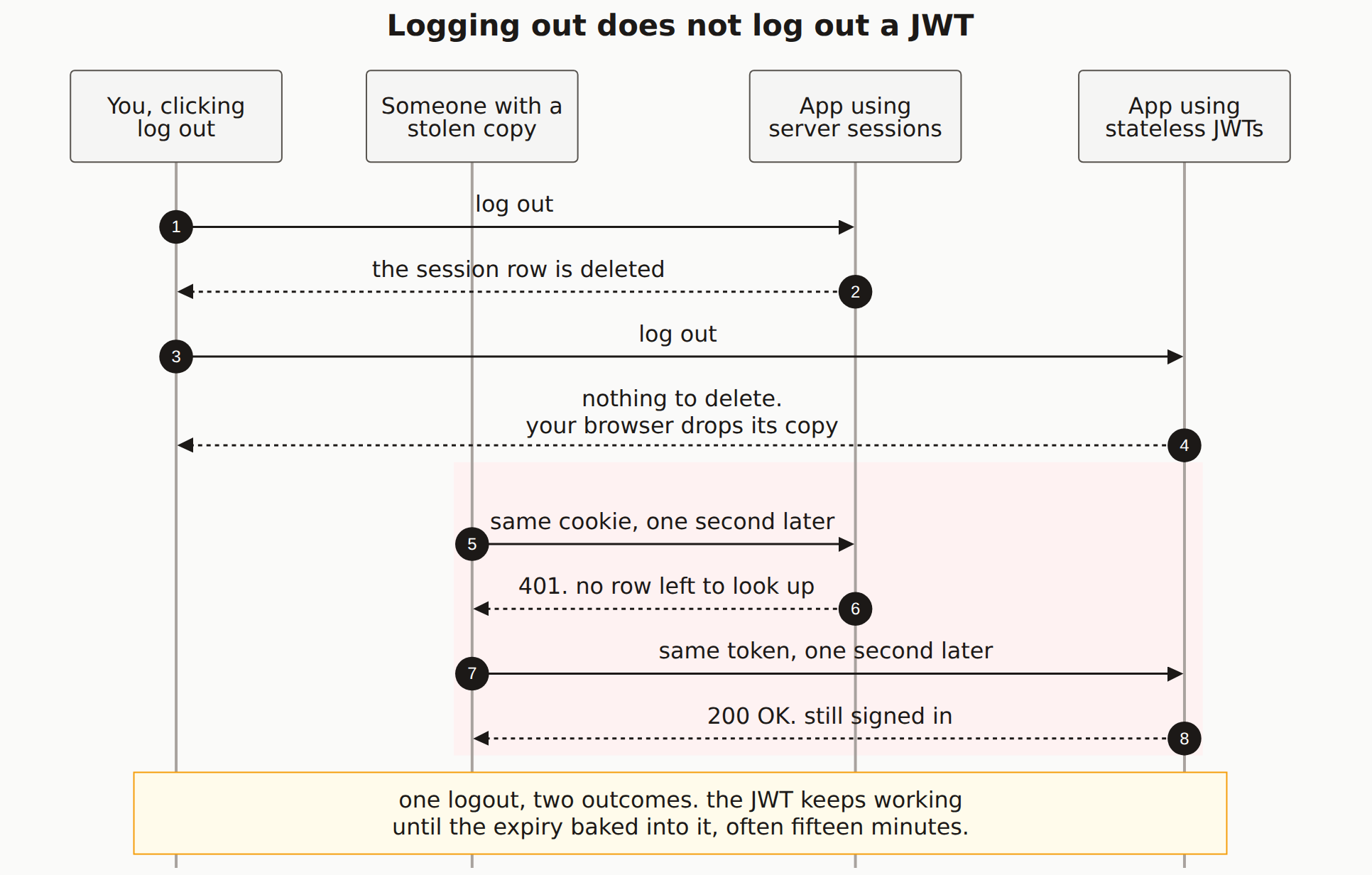
If a JWT is stolen, the attacker has valid credentials until the token expires. With sessions, you can immediately invalidate a compromised session. This single difference makes sessions the safer default choice for most applications.
The Revocation Problem
Why Revocation Matters
Token revocation is needed for: user logout, password changes, permission changes, detected compromise, and account suspension. With sessions, you delete the session from your database. With JWTs, the token remains valid until expiry unless you build revocation infrastructure.
JWT Revocation Workarounds
To revoke JWTs, you need a blocklist: a database of invalidated tokens checked on each request. This reintroduces server state, negating JWT's stateless benefit. You now have the complexity of both approaches with the benefits of neither.
When JWTs Make Sense
Service-to-Service Authentication
JWTs work well for short-lived service-to-service tokens where revocation isn't needed. A token that expires in minutes poses less risk if stolen. The stateless nature reduces latency between services.
Specific Use Cases
- API authentication between trusted services
- Short-lived access tokens (5-15 minutes)
- Passing verified claims between systems
- Offline token verification when latency matters
Choose Sessions When: You need immediate revocation, simple logout, or are building a traditional web application. Sessions are the secure default for user authentication. Best for applications where security matters more than statelessness, which is most applications.
Choose JWTs When: You have specific technical requirements for stateless tokens: service-to-service auth, microservices communication, or short-lived access tokens paired with refresh token rotation. Don't use JWTs just because they're trendy.
Common JWT Mistakes
Security Antipatterns
- Using JWTs for session management without revocation
- Long-lived JWTs (hours or days)
- Storing JWTs in localStorage (XSS vulnerability)
- Using "none" algorithm or weak signing keys
- Putting sensitive data in JWT payload (it's not encrypted)
- Not validating all claims (iss, aud, exp)
Best Practices
Session Best Practices
- Use secure, httpOnly, sameSite cookies
- Regenerate session ID after authentication
- Implement proper session expiration
- Use secure session stores (Redis with encryption)
JWT Best Practices (When Necessary)
- Keep tokens short-lived (5-15 minutes)
- Use refresh token rotation
- Store access tokens in memory, not localStorage
- Implement token blocklisting for logout
- Validate all claims server-side
Are JWTs more secure than sessions?
No. JWTs are often less secure because they can't be revoked without additional infrastructure. Sessions can be immediately invalidated when compromised. JWTs have valid use cases, but security isn't one of them.
Don't JWTs scale better?
Theoretically yes, but practically the difference rarely matters. Session stores like Redis handle millions of sessions easily. Once you add JWT blocklisting for revocation, you've reintroduced state anyway.
What about refresh tokens?
Refresh token rotation can improve JWT security. Short-lived access tokens paired with rotating refresh tokens limit the impact of token theft. But this adds complexity. Consider if sessions would be simpler.
Secure Your Token Strategy
CheckYourVibe validates your session and JWT implementation for security issues.
Further Reading
Made your choice? Here's how to secure your selected stack.